Easy Serve Espresso (ESE) pods are the espresso world’s equivalent of Nespresso or Keurig. They enable you to simply pop one into your machine to make an espresso drink without having to grind beans and tamp. Basically, they promise to save time without cutting corners when it comes to taste and flavor.
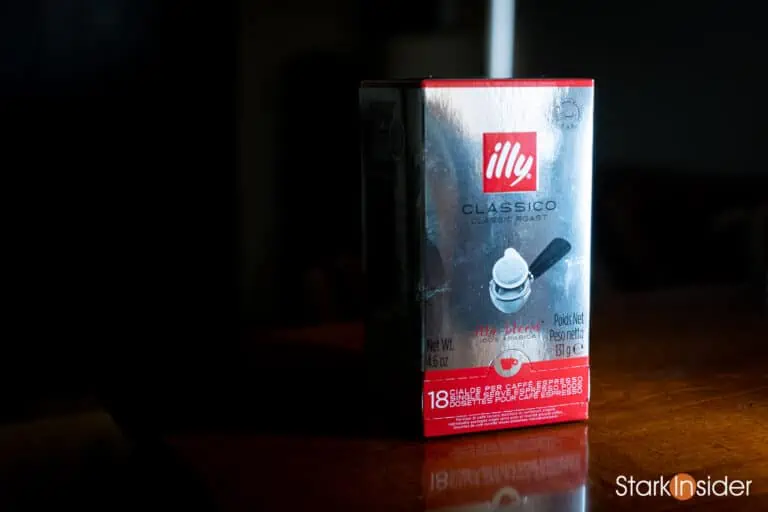
ESE was founded by Illy in 1974. They actually were the forerunners in the market which eventually developed in to the modern pod market we know today. No surprise then that Illy ESE pods are the most common ones found on the market and the ones we are testing here today on Stark Insider.
But are ESE pods any good? And are they worth using instead of doing all the work yourself?
Let’s find out.
What Is an ESE Pod?
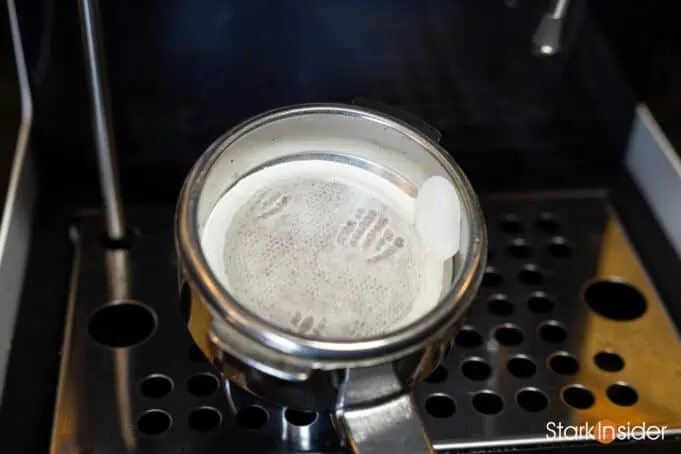
An ESE pod contains about 7 grams of fine coffee grinds wrapped in a paper package. Here’s an example of an Illy medium roast pod:
Because they’re biodegradable these ESE pods are, perhaps, more environmentally friendly than competitive offerings from Keurig and Nespresso. I say perhaps as each comes wrapped in tin foil, so I wonder if that sort of negates the benefit?
In any case the pods are actual espresso-based pucks. Unlike others this is real espresso — not some sort of proprietary hybrid coffee/espresso blend. In theory it promises an espresso shot with crema just like you’d make if you were grinding beans and tamping.
How Do I Use an ESE Pod?
Using an ESE pod is as simple as it gets. Tear open the package and place the pod with the Illy logo face up into the portafilter and you’re ready to go.
One really important note: be sure to use the correct basket.
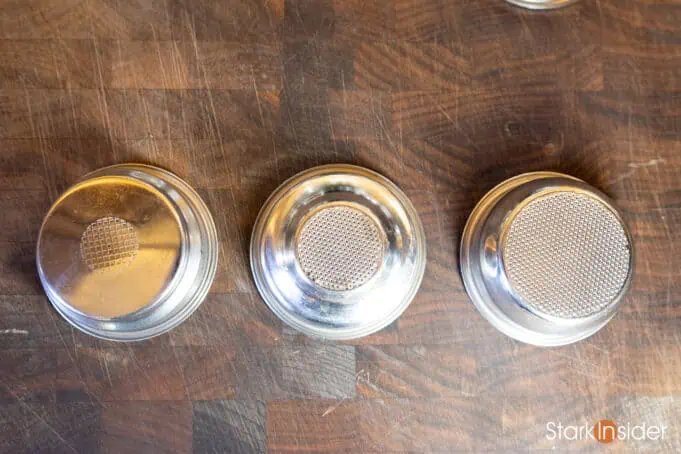
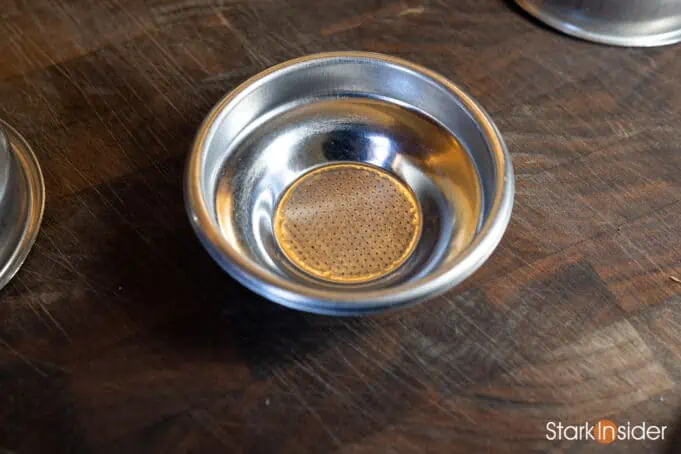
Most espresso machines include three basket types. A single. A double. And a pressurized basket (suitable for ground coffee and/or beginners learning how to grind and tamp).
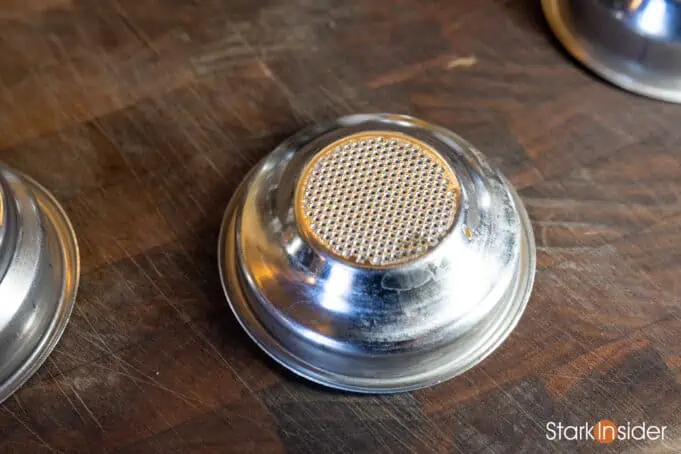
The one to use with ESE is the single — not the pressurized! If you’re in doubt be sure to read the manual and verify (or just Google and fall into the Rabbit Hole that is Reddit espresso).
See below for an example of the types of filter baskets.
Three basket types from Left: Pressurized, single, double. For ESE you’ll use the single in the middle.Underside of a single basket. Use this one with ESE pods.Single basket.
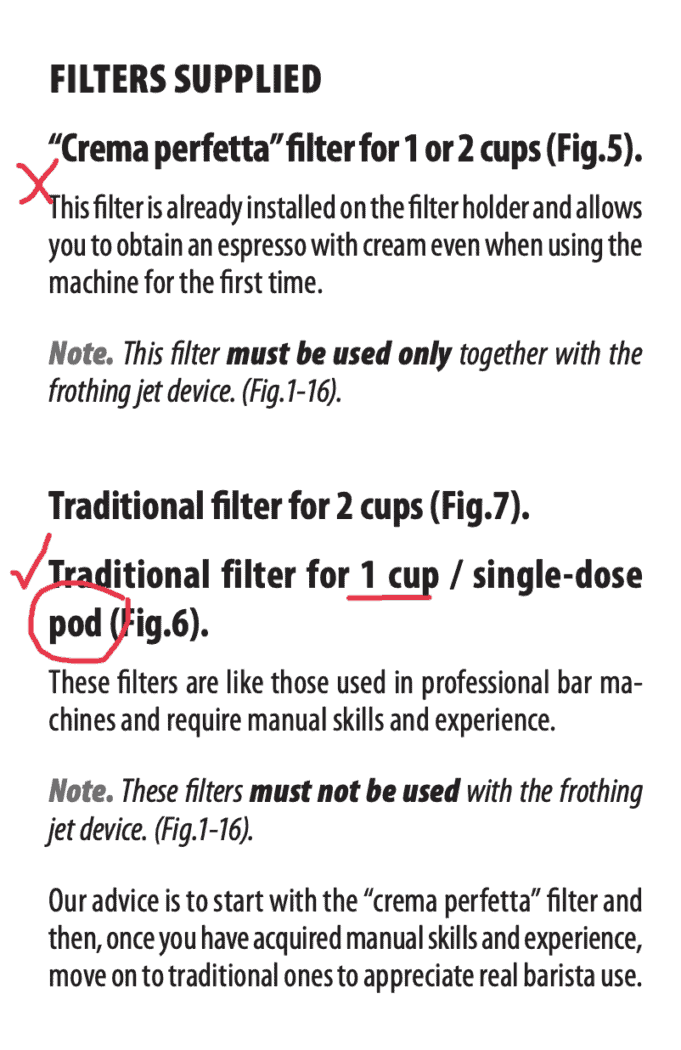
In the case of the Gaggia Classic Pro espresso machine you can see below in the manual that it does specify using the single basket with pods:
Note in the case of the Gaggia Classic Pro the machine ships from the factory with the pressurized filter basket (“Crema perfetta”) installed. Do not use this with an ESE pod unless you want to make a righteous mess.
Why are there So Many Negative Reviews of Illy ESE Pods on Amazon?
PSA Alert!
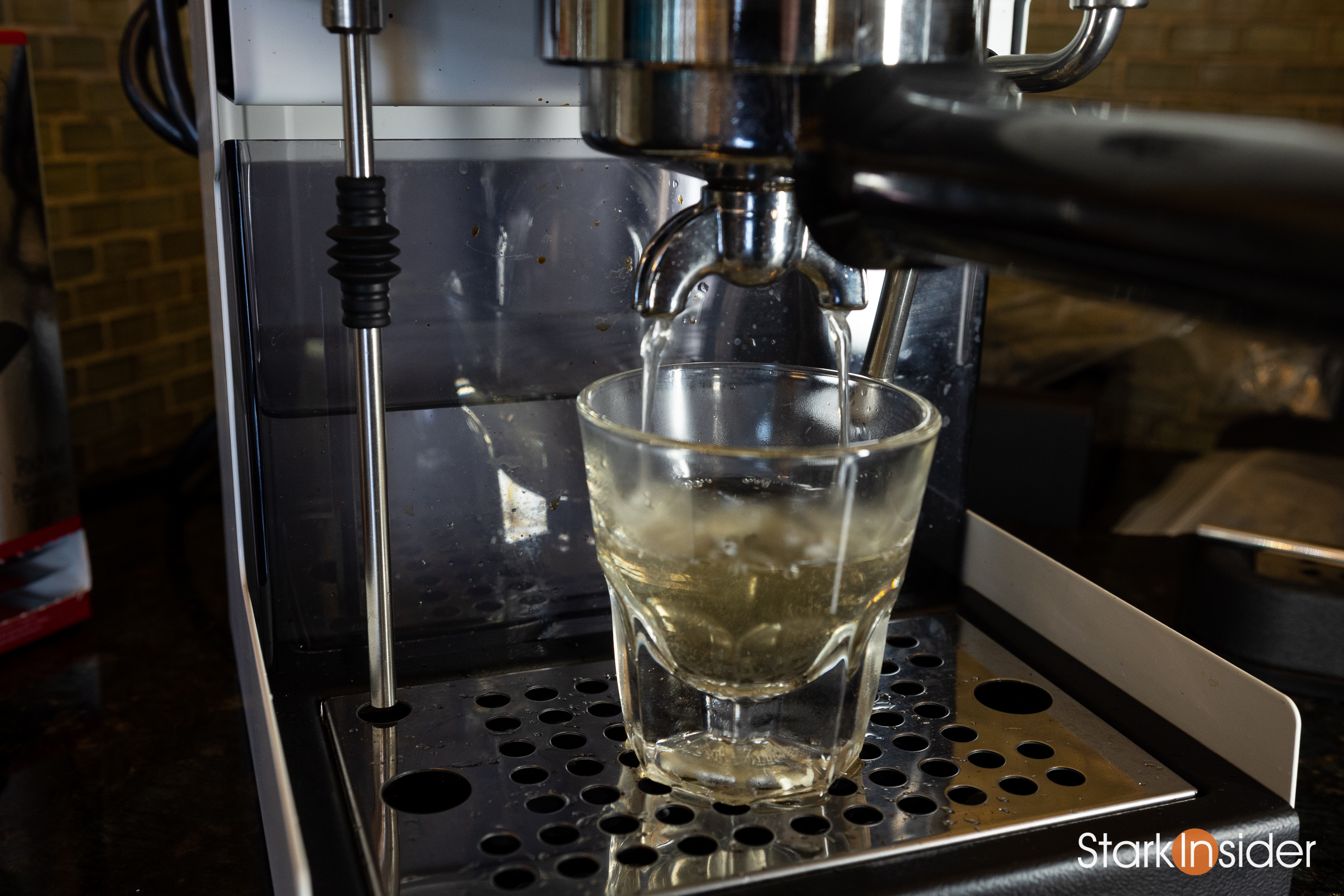
If you’re checking out ESE pods on Amazon you may notice a fair amount of critical 1-star reviews. For instance many reviewers of the Illy Medium Roast pods complain about water shots (see photo below) — that the shot comes out mostly water with a faint bit of espresso.
Why that abysmal result?
The above section on baskets holds a clue I think!
Not good. This is what your shot looks like when using the wrong basket (pressurized in this example).
I’m guessing close to 100% of these reviewers did not read the manual for their espresso machines and are simply using the wrong basket.
If you place an ESE pod into a pressurized basket (as pictured above next to other baskets) the water will easily flow around the pod following the path of least resistance as there’s too much space and the basket is simply too big. Again, these are for pre-ground coffee and/or someone just starting out and learning how to grind/tamp — the pressurized basket is more forgiving for imperfectly prepared pucks.
So, reminder: please be sure to use the correct basket if you want to get a correct espresso shot.
Does an ESE Pod Taste Good?
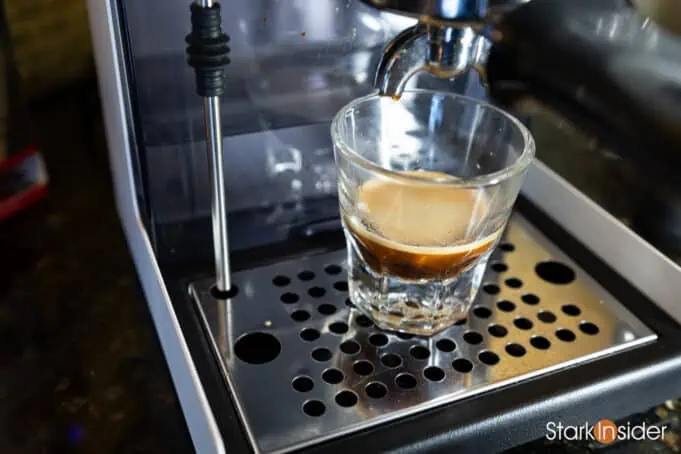
Espresso shot using a single basket on a Gaggia Classic Pro.
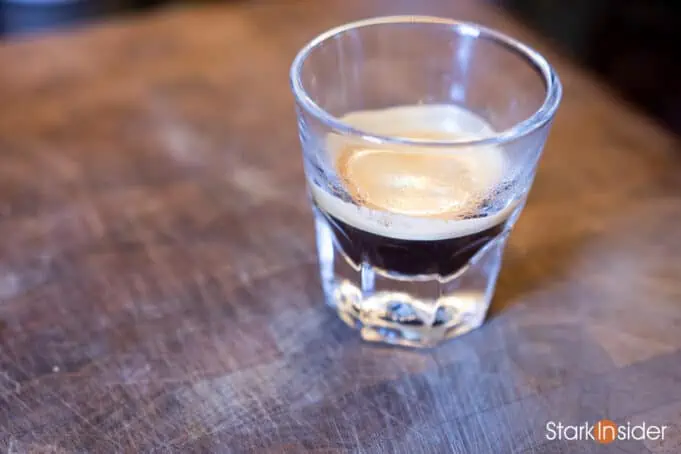
I went ahead and pulled a test shot of an Illy ESE pod on the Gaggia and you can see the result above. Looks quite good! There’s a nice layer of crema. Not too much, not too little. Overall I don’t see any issues, visually at least.
Note that this is about an ounce or so as the pod is only 7 grams, so you’re not going to get a long shot. This will probably be fine for espresso drinkers, but for milk-based options you’ll likely need to run the shot longer, or, better, just use two pods in a row to get a longer pour. If you don’t your milk drinks will taste pretty weak and milky — if you prefer that you can just use the single shot as this is all about personal preference.
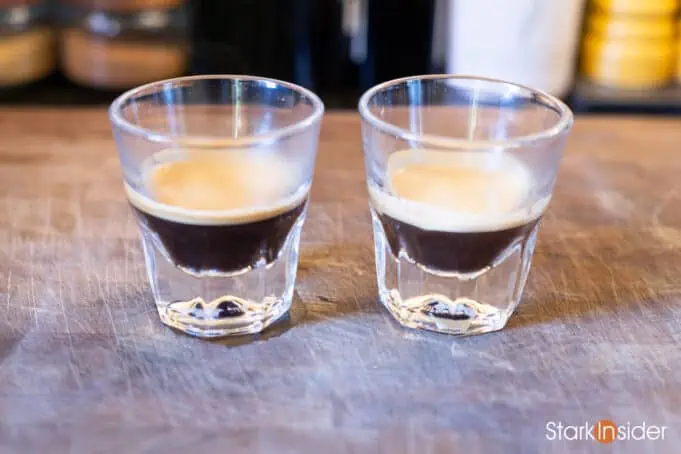
Two espresso shots. One from an ESE pod, the other from a traditional HX espresso machine. Can you tell which is which?
Regarding taste: excellent.
Loni Stark and I did a blind taste test, comparing the ESE espresso shot to one made with tried-and-true grinding and tamping on a Bezzera Heat Exchanger machine. We both picked the Illy ESE pod as the smoother, better shot. (hint: I really need to work on my home barista skills!).
No doubt a really skilled barista will pull a better shot. Regardless, the convenience here is undeniable.
Also, these ESE pods are quite a good value. Whereas Nespresso pods can easily run $1 USD or more, these Illy Medium Roast pods you see tested in this article cost $8.49 for a pack of 18 pods. That works out to only $0.47 each. Check Costco for Keurig pricing and you’ll again see these ESE pods are quite competitive.
The Fun Part About ESE Pods
If you already own an espresso machine chances are these type of ESE pods will work so long as you use the right basket. That means pretty much everything from a Gaggia Classic Pro like the one we tested here, and almost anything, from a Rancilio Silvia, Breville or De’Longhi, to models from Rocket Espresso, Profitec/ECM and Lelit to even the high end stuff from La Spaziale and La Marzocco. Just be sure to double check compatibility first.
But why would you want to even consider using them? Convenience aside — which is a pretty big reason in itself of course — there’s other reasons why you might want to occasionally consider ESE as an option.
For Decaf Shots — If the hopper on your grinder is full of caffeinated beans then using an ESE pod gives you an easy alternative to making an afternoon decaf shot (single-dosers needn’t worry about this as they can dose whatever bean they like).
For Guests — Maybe a guest prefers a decaf or maybe a different style of espresso (say, Arabica vs Robusta). Having a variety of ESE pods on hand is a great way to offer variety.
For Fun — Maybe you’re bored of your espresso flavor and want to try something new, but don’t want to commit to an entire (and expensive) bag of beans. ESE to the rescue!
For Caffeinated Shots — This is opposite George. I drink mostly decaf. So my hopper is full of typical Third Wave stuff from the likes of Verve, Stumptown, Blue Bottle, etc. On days when I really do need a caffeine jolt I simply tear open an ESE pod and use that instead.
Which Espresso Machines Take ESE Pods?
This is the question that trips up most people who get curious about pods, and it is worth answering
before you buy a box of them. ESE is a physical standard rather than a brand, so compatibility comes
down to what sits inside your portafilter rather than what badge is on the front of the machine.
An ESE pod is 44mm across and holds roughly seven grams of ground coffee pressed between two sheets of
filter paper. To brew one properly, your machine needs either a dedicated ESE basket or a pressurized
basket that can generate enough back pressure on its own. The paper pod cannot be tamped, and it does
not resist water the way a well-packed puck of fresh grounds does, so without that help you tend to get
a thin, fast shot with very little crema.
Three things to check before ordering pods:
Does your machine ship with a pressurized or ESE basket? Many entry and mid-range machines include one in the box, often labelled as a single-shot or “perfect crema” basket. Our Gaggia Classic Pro has one, which is why it worked here without any modification.
Can you buy an adapter for it? Some machines that do not include an ESE basket have one available separately. The Rancilio Silvia is the well-known example: it takes pods happily enough, but not with the basket it comes with.
Is it a capsule machine? If so, the answer is no. More on that below.
One practical note. A 44mm pod sits slightly proud in some baskets, and you may need to press it flat
with a finger before locking the portafilter in. That is normal and it is not a sign the pod is the
wrong size.
ESE Pods vs Capsules: What the 44mm Standard Means
The words “pod” and “capsule” get used as though they mean the same thing, and in ordinary
conversation nobody minds. When you are buying, though, the difference matters quite a lot, because
one of them is an open standard and the other is not.
ESE stands for Easy Serving Espresso. Illy established it in 1974 and then, unusually, published
it, so any roaster can make a pod to the spec and any manufacturer can build a machine that accepts
one. That is why a box of pods from a small Italian roaster will work in a machine from a completely
different company. The spec is simply 44mm of diameter, around seven grams of coffee, and a paper
filter wrapper.
Capsules work the other way around. A Nespresso or Keurig capsule is a sealed plastic or aluminium
container designed for one manufacturer’s machines, and the machine is designed to puncture and brew
that specific container. There is a large market in compatible capsules, but the format itself belongs
to somebody.
A few other pod sizes exist and are easy to confuse with ESE:
Senseo pods are considerably wider and unpressurized. They are made for drip-style brewing, not espresso, and will not fit an ESE basket.
Nespresso and Nespresso-compatible capsules are sealed and machine-specific.
Coffee bags, sometimes sold as pour-over or single-serve, are a different thing again and are not for espresso machines at all.
The practical upside of an open standard is choice. Because nobody owns ESE, you are not locked into
one roaster’s catalogue, and prices tend to stay reasonable. The downside is that it never achieved
the marketing muscle of the closed systems, which is why the format feels obscure outside Italy
despite being older than most of its competition.
Which ESE Pods to Buy
Illy is the obvious starting point, and not only for historical reasons. They are the most widely
stocked, the quality control is consistent, and the packaging is good, which matters more than it
sounds like it should. A pod is paper wrapped around pre-ground coffee, so it is exposed to staling in
a way that a sealed capsule is not. Individually foil-wrapped pods keep noticeably better than pods
packed loose in a bag.
Beyond Illy, the names you will run into most often are Lavazza, Caffè Borbone, Caffè Vergnano and
Kimbo. All four are established Italian roasters with real ESE lines rather than novelty runs, and all
four are generally easier to find in Europe than in North America. Borbone tends to be the value pick
of the group, and Vergnano the one enthusiasts bring up most in the specialty conversation.
A few things worth weighing before you commit to a large box:
Individual wrapping. If the pods are not foil-wrapped one at a time, buy a smaller quantity. Freshness falls off faster than you expect.
Roast level. ESE lines lean traditional Italian, which often means a darker roast with robusta in the blend. It is not a rule, though: Caffè Borbone’s best-known lines are 100% robusta, while Illy’s own pods are 100% arabica. Check the blend rather than assuming.
Price per pod. This is where the format earns its keep. Compare against capsules rather than against beans; a bag of good beans will always be cheaper per shot, and that is not really the comparison you are making when you reach for a pod.
Frequently Asked Questions
What does ESE stand for?
Easy Serving Espresso. It is an open pod standard established by Illy in 1974, specifying a 44mm paper-wrapped pod holding roughly seven grams of ground coffee.
Will ESE pods work in my espresso machine?
Only if your portafilter has a dedicated ESE basket or a pressurized basket. Many machines include one in the box, and some others have an adapter available separately. Capsule machines such as Nespresso and Keurig cannot use ESE pods at all.
Are ESE pods the same as Nespresso capsules?
No. ESE is an open 44mm paper pod that any roaster can make and any manufacturer can support. Nespresso capsules are sealed, machine-specific containers belonging to a single system.
How much coffee is in an ESE pod?
About seven grams, which is a single shot. That is slightly less than the 18 grams a typical double basket holds, so expect a single rather than a double from one pod.
Do ESE pods make good crema?
They can. The pod relies on the pressurized or ESE basket to build back pressure, since the paper puck cannot be tamped. In our testing with Illy pods on a Gaggia Classic Pro the crema held up well.
Conclusion
In then end these ESE pods in our tests did deliver on several counts:
Convenience
Flavor and taste
Price/value
If you’re shopping for a pod system and are not interested in making your own espresso shots (grinding and tamping) you’ll want to look elsewhere. Better options abound from the likes of Nespresso and Keurig to fully super-automatic espresso machines from Philips and Jura. Those would be better bets for those interested in the convenience of pod only or a bean-to-cup system.
For those who own an espresso machine with a traditional workflow who sometimes don’t have the time to prepare their own espresso pucks manually, the ESE pod is a nice convenience to have. On a busy day just pop one into the portafilter. Start your shot. Wait 25-30 seconds. And you’re ready to go about your day without sacrificing any espresso quality. Then when you have more time on the weekend you can get back into home barista mode and do your thing.



Why are there So Many Negative Reviews of Illy ESE Pods on Amazon?