
Being open is both a blessing and a curse.
One the plus side, others can run hog wild. In the case of Google’s Android operating system that means manufacturers can build handsets to their heart’s content. Large. Small. Cheap. Premium. They can run near stock Android (Moto X Pure) or come with all sorts of — often dreaded — bells and whistled layered on top using a skin (almost any Android-based phone by Samsung).
The resulting flood of phones, and range of choices has been good for Google.
It gives consumers plenty of choice. And in lots of places and countries too.
The result?
Massive market share.
Thought its cooled recently, Google enjoys huge leads in market share for mobile operating systems including major markets: USA (67%), China (78%) and Europe (76%).
But, despite being the market leader in mobile, there’s downsides to being open.
First and foremost, you give away significant margin. That has a negative impact on profits. Compare Apple’s and Google’s financials for mobile and it becomes readily apparent.
You also cede a fair degree of what’s generally referred to as the “user experience.”
Since Apple makes both the hardware (iPhone) and software (iOS) it can tightly control every aspect of how we interact with it. In short: everything is consistent, with simplicity a key factor in winning over loyal, repeat customers. Google, by comparison, licenses Android. That means OEMs like Samsung, HTC, Motorola (Lenovo), Huawei take a degree of power away from Google. They can tinker and customize Android. While that can be good in some cases, it generally results in an inconsistent user experience across various handsets.
With the Nexus program, Google attempted to bring to market what it believed to be the ideal Android experience. Though the Nexus phones were, and are made by others (Nexus 5x by Motorola and Nexus 6p by Huawei for last year’s models), Google introduced strict guidelines. The user experience needed to be centered around stock Android. No fancy skins. And little to no alterations to the core operation of Android.
Is Google Building its Own Phone?
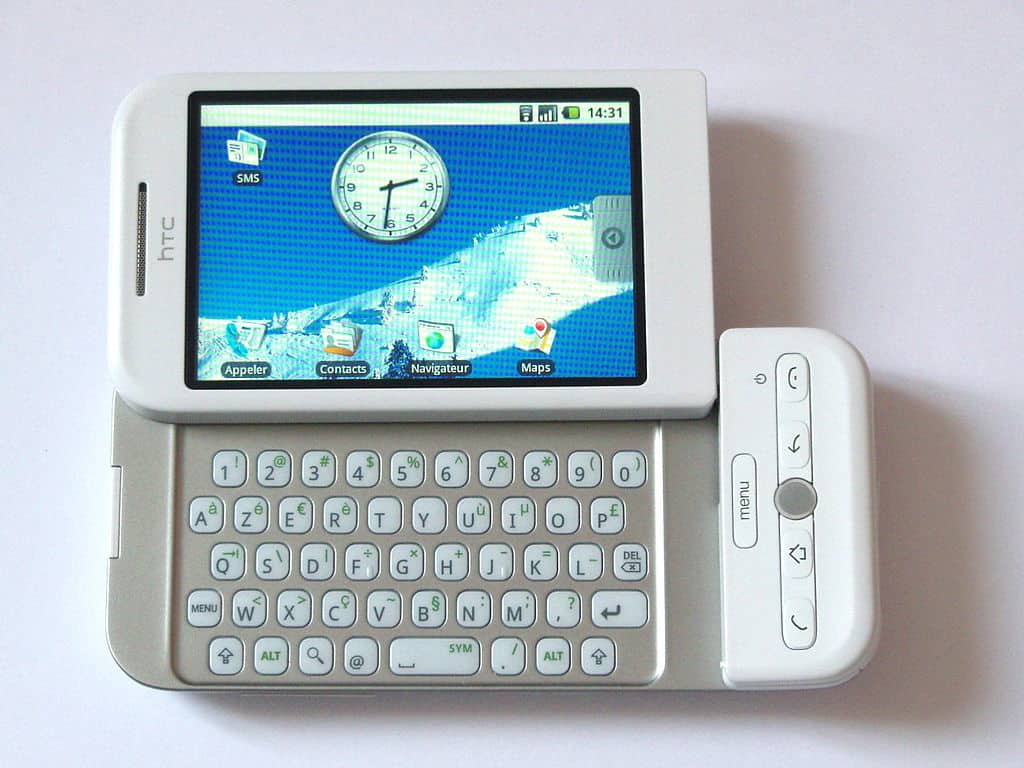
Now comes word that Google is planning to make its own phone — in house.
Sound familiar?
If Google did make its own handset, without a traditional OEM partner like Motorola or Huawei, and brought to market a “Google phone” running Android, the message would be loud and clear:
Apple, we want to be like you.
Interestingly, if this turns out to be the case in 2016 as many are predicting, it would mean Google has come full circle.
That’s because the very first Android phone was made by Google. It was 2006. A team of engineers had built a prototype to showcase an early vision of would could be the company’s charge into a market then dominated by the likes of Nokia and BlackBerry (how markets change!).
In 2008, that phone would become the T-Mobile G1. HTC would manufacturer the phone. T-Mobile would be the carrier of choice, and sell it in retail locations across the U.S. Android was born. In a few short years the mobile wars would become a two horse race: Google vs. Apple.
If Google does bring a homegrown phone to market it would mark the 10th anniversary of its clunky, yet innovative, prototype handset.
Android as Both Open and Closed
Companies are usually open or closed. Not both.
Microsoft is famously, like Google in many respects, open. It relies on other companies to make hardware, while it focuses on the (high margin) software — primarily the Windows desktop operating system.
Could Google want to have it both ways?
Perhaps it can offer a “Google Phone” while continuing to license its OS to others.
Long-term that seems untenable though. Market confusion would reign. And the inevitable co-opetition would create a strain among partners.
My suspicion is that if we do see a homegrown Google phone this year it would mark a first step towards becoming more like Apple. That, over time, Google would expand its own, internal range of handsets, and eventually limit the open licensing of Android.
Sound far-fetched?
The Google iPhone
Don’t forget, in 2006 it was a crazy notion to believe Google would even dare enter the cell phone race.
And, in 2015, look at the early (though limited) success of Project Fi, its fledgling (and superb) cell service; again, something a few years we would not have foreseen.
Looking to the future, it’s not a stretch to imagine a Google-made handset. It has the engineering capacity. It has the operating system. It has the cloud infrastructure. In short, Google has everything Apple has… except its own iPhone. In the next six months, that may change.