
Google’s annual I/O developer conference will once again be held at the Shoreline Amphitheater in Mountain View.
The three day event, per the geekiest of geeky announcements, will take place May 8-10, 2018.
Look, once again, for a visionary keynote followed by key product updates covering major product lines such as Android, Chrome, Pixel phones and Pixelbook laptops, smart home tech including Google Home and Google Assistant, AR/VR updates (Daydream), and surely at least a surprise or two.
“Pineapple” which is believed by many to be the company’s flagship Android mobile operating system will probably garner lots of air time. Given the priority consumers are placing on powerful mobile devices, both Google and Apple continue to pour significant R&D resources into their platforms.
Look too for substantial updates on Google Home, another critical platform.
The smart home has taken on new life thanks to smart speakers. Amazon with its Alexa-based Echos has the early lead. But Google did well to expand its footprint in 2017 and now offers three models of its Home speaker: Google Home, Google Home Mini and Google Home Max. Meanwhile, Apple’s first iteration, the HomePod, will ship next month, after missing the critical holiday season.
But… out of all that good stuff, I wonder…
Will Google re-launch its wearable platform, Android Wear?
The OS, featured on smartwatches from partners such as Motorola, Sony, LG and Huawei among others, hasn’t really taken off in the marketplace. Meanwhile the Apple Watch pretty much owns the smartwatch market, with well over 50% share.
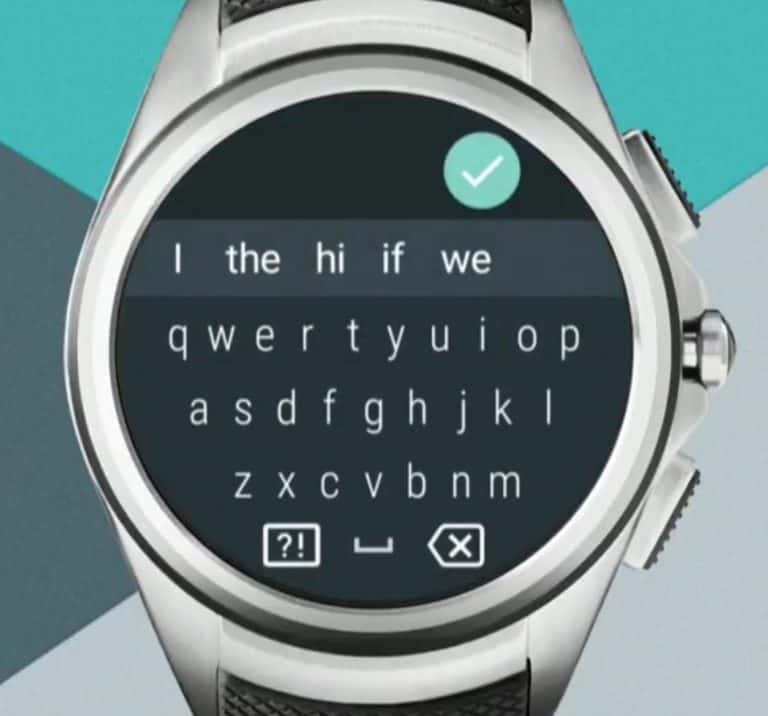
I attribute the poor uptake on Wear predominantly to a confusing interface, bulky designs and a focus on specs of ease-of-use. The best example? Google’s instance on focusing on Dick Tracy stuff. Like using a watch for phone calls. Or using a ridiculously microscopic keyboard to hammer out texts and emails on a tiny watch screen. Not that these things aren’t at times convenient, it’s just that there’s much more simpler things that need to be focused on first. Notifications for one. They’re unreliable in Wear 2.0. Google a bit and you’ll see what I mean. I have a Huawei Watch (gen 1) and I think it actually performed better with Wear 1.5. But that’s water under the bridge, because until Google fixes Wear I’m sticking with the Apple Watch and iPhone — a rock solid combination.
Given that Google has largely ignored the Wear platform over the past 18 months or so (the last major update in early 2017 was announced by a blog post and it was given no prime air time at last year’s I/O), I’m thinking this might be the year to re-brand the platform and launch it, with a simpler tact.
Pixel Watch.
That would work. Keep it simple. A large model. A small model.
Do away with circular designs. Yes, many like them. But Apple dominates, and it uses a square face. So why try to be different if it means failing in the marketplace?
Like the successful Pixel phones, Google should partner for the hardware — LG? Motorola?. Just like the good old Nexus days.
Then it should integrate the software so it’s as robust as Apple Watch and, again, nail the reliability and ease of use.
Sell Pixel Watch through the Play Store. And you’re done.
I really can’t see any other way forward with Wear. True, there are several fashion labels building on top of Wear, but their efforts seem tokenism at best. Sales are obviously not there. Check any wearable analyst report and you’ll quickly find out Wear sales are almost insignificant.
As always I/O should be an interesting event, especially the opening keynotes and morning of the first day. There Google typically showcases its juiciest stuff.
Will we see a new, reinvigorated, simpler Wear this year? And will it get its share of air time at I/O?
I hoping for yes and yes.