
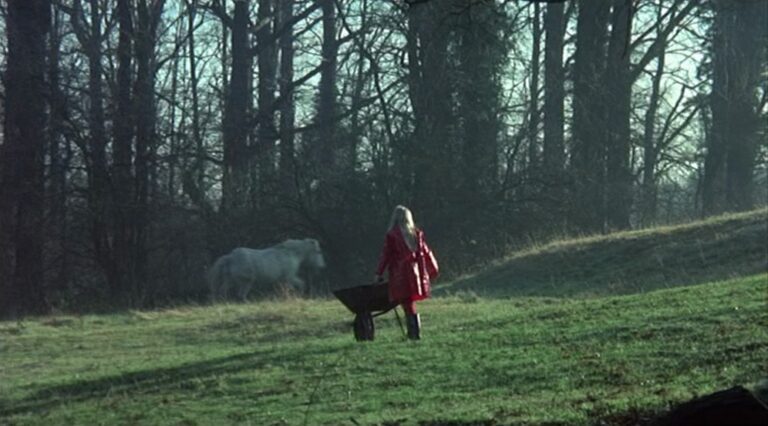
Back in October 2018 I put together my picks for the top 10 horror films of all time. The rules then were simple, and I’m sticking with them this time around too. I prefer art-house and generally abhor cheap jump scares (though they can serve a purpose on a date), and a film has to have a high re-watchability factor: something you’d want to see time and time again for the story, the cinematography, the colors, the soundtrack, the whole experience.
That list is eight years old now, so it seemed like a good time to check it against itself. I’ve re-watched these films several times, almost every other year, and most of the list holds up. Rosemary’s Baby is still number one. The Shining climbs from sixth to second, which is the biggest change. Don’t Look Now, an honorable mention last time, takes the tenth spot, and that means The Witch and Black Swan, which shared it in 2018, move down to the honorable mentions. Nothing released after 2017 made the ten, though a few newer films came close, and they’re at the end.
Here’s the 2026 list, counting down.
10. Don’t Look Now (1973)
Director: Nicolas Roeg | Cinematography: Anthony B. Richmond
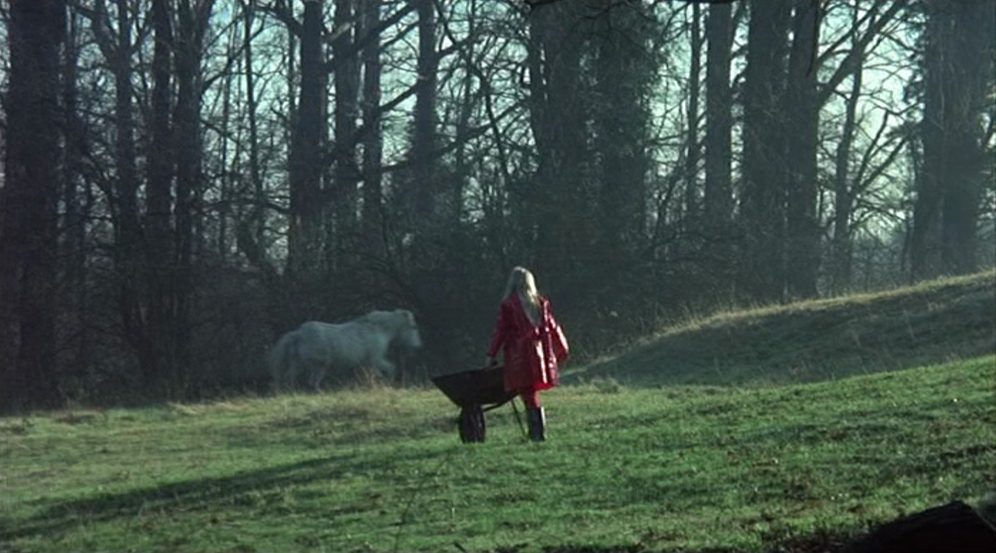
Donald Sutherland and Julie Christie play John and Laura Baxter, a couple who go to Venice after their young daughter drowns at home in England. Roeg turns the city into a maze of canals, half-restored churches and dead-end alleys in the off-season, and it seems built to keep the two of them from ever leaving. This is a film about grief more than anything, and what scares you in the end comes out of how badly John wants his daughter back. Then there’s the editing. Roeg cuts across time the way memory does, and the famous love scene, intercut with the couple dressing for dinner afterward, still feels bolder than most of what gets made now. Keep an eye on that small figure in the red coat. Adapted from a Daphne du Maurier story, with a lovely, sad score by Pino Donaggio.
Unforgettable scene: the opening, when Sutherland’s character knocks a glass of water across a slide and the red of a small hooded figure bleeds through it… the symbolism is chilling.
9. Psycho (1960)
Director: Alfred Hitchcock | Cinematography: John L. Russell

Because only Hitch himself would have the cojones to kill off his major star (Janet Leigh) in a thrilling and surprising cinematic twist. The rest, of course, is shot-for-shot perfection. Too bad about that slightly awkward epilogue though.
Unforgettable scene: well, the shower scene of course. But there are so many wonderfully framed shots it’s hard to choose. Another: when private investigator Arbogast falls backwards down the stairs (reportedly shot from Saul Bass’s storyboards while Hitch was out sick, one of many bits of trivia Psycho is known for).
8. Halloween (1978)
Director: John Carpenter | Cinematography: Dean Cundey

He’s coming to get you! So much innovation here from the legendary John Carpenter. He co-wrote the film with Debra Hill. Directed it. Scored it. And thanks to a scrappy and skilled crew, with Dean Cundey behind the camera, pushed a lean budget to the max. Although the POV (point-of-view) shot may have been used previously, it was perfected in the opening scene when a young Michael dons a mask, climbs up the stairs of his family home, and does the unthinkable. But Michael might not be the only lunatic loose in Haddonfield. Let’s not forget that Loomis (Donald Pleasence) would drive himself to near insanity trying to convince anyone who would listen that a killer was stalking the streets on Halloween night.
Unforgettable scene: when The Shape sits up behind a sobbing Jamie Lee Curtis.
7. Suspiria (1977)
Director: Dario Argento | Cinematography: Luciano Tovoli

Yes, that’s stage blood. The terrible and yet so great 1970s kind. Thankfully that artifice in art direction only enhances the surreal experience to be had with Dario Argento’s original Suspiria. While the world was awestruck by Star Wars, this Italian gem would forever alter how filmmakers treated visual aesthetics and influence generations of future directors. Gorgeous blues, pinks, and purples. Neon Demon (2016) by Nicolas Winding Refn comes to mind as an obvious Argento/Lynch-inspired work. But no one has brought together such disparate elements (a hells-bells metal score by Goblin, outlandish visuals, wonky side-stories and death sequences) with such acumen as Argento in this, his fantastical masterpiece.
Unforgettable scene: the finale is strikingly beautiful and haunting at the same time.
6. Repulsion (1965)
Director: Roman Polanski | Cinematography: Gilbert Taylor

Ah, the little sister! Ah, the unreliable narrator! Which is it? Or both? The first in Polanski’s “Apartment Trilogy” is the proverbial descent into madness. After the MeToo movement, a film like Repulsion seems even more apropos than ever before. Grabby men doing grabby things to an innocent and incredibly convincing Catherine Deneuve (as Carol). What I especially love about Repulsion aside from its slow burn and the oddness of its lead, is that it reveals more of itself the more you re-watch the film. There’s irony here too, and sadness. Perhaps no film has better captured loneliness and despair as effectively. Rape. Violence. Not exactly a fun date movie, but a historic bit of cinema for sure.
Unforgettable scene: hallway of hands.
5. Nosferatu (1922)
Director: F.W. Murnau | Cinematography: Fritz Arno Wagner

When they say “shadows and light” they must be talking about Nosferatu. German expressionism reached its peak, or at least presented its most thrilling example in Murnau’s Nosferatu. For all horror film fans specifically, and film students at large, this masterpiece should be required viewing. A gothic legend is born.
Unforgettable scene: the staircase shadow is sublime and iconic for a reason.
4. Alien (1979)
Director: Ridley Scott | Cinematography: Derek Vanlint

Forget the sequels (much like you can do with almost every horror franchise). Stick with this one, Ridley Scott’s one and only Alien. Can they hear you scream in space? Well, I do know that if an alien were to exist and were to set its sights on the crew of an unwitting merchant vessel, it will have met its match in Ripley (Sigourney Weaver). Apart from outstanding performances, most notably from Weaver, the cast here is positively enshrined in glorious art direction and sets. Jaw-dropping stuff. The finale has us on pins-and-needles, with a resolution that unfolds beautifully. Do we need Aliens? No. But it’s okay, and Alien 3 shows us what an up-and-coming guy named David Fincher can do with a dull script. Stick to the first one, Ridley Scott at the top of his game.
Unforgettable scene: you know the one.
3. A Nightmare on Elm Street (1984)
Director: Wes Craven | Cinematography: Jacques Haitkin

Does Nightmare deserve to be so high on this list? Maybe not. But this is a different Freddy. Before MTV, before the celebrity, this was a disturbed individual, the son of a thousand bastards. In 1984, Freddy Krueger hadn’t yet mastered the Bond-like one-liner quip. He was simply content to chase the hell out of you and your friends while you slept. And your parents? Not exactly innocents. Dig into that backstory. NOES is rich with metaphor and allegory. On the surface it’s exactly what we want in a fright fest: an eternal bogey man wants us dead. The late, great Wes Craven takes a simple concept (based apparently on true events he read in a newspaper) and spins a highly entertaining, scary, atmospheric story that I believe influenced the genre for the next thirty years.
Unforgettable scene: the first time we meet Freddy (before MTV turned him into a comedian).
2. The Shining (1980)
Director: Stanley Kubrick | Cinematography: John Alcott

I never could understand why Stephen King didn’t take to this adaptation of his famed novel. Stanley Kubrick. Jack Nicholson. That Overlook set. What more could you want? Yes, Nicholson is very Nicholson. So much so that it’s plausible to believe that Jack Torrance is already a little bonkers before starting his new winter job at the remote hotel.
In 2018 I had it at six. It moves up to two because it holds up to repeat viewing better than anything else here apart from Rosemary’s Baby. A lot of the dread comes from the camera itself: John Alcott’s photography, and Garrett Brown’s Steadicam gliding behind Danny’s Big Wheel through those hallways, in a hotel whose floor plan never quite adds up. Kubrick holds a shot until you start searching the frame for whatever is wrong with it. The folks in Room 237 took that idea a long way, but you can see why the film invites it. I’d still put The Shining high on the list of works that just ooze dread and discomfort. Now it’s nearly at the top.
Unforgettable scene: Jack on the staircase, “I’m not gonna hurt ya.”
1. Rosemary’s Baby (1968)
Director: Roman Polanski | Cinematography: William A. Fraker

Many cite The Exorcist as the best horror film of all time. Okay, fair enough. No question it’s a scary, impeccably made film. But, for me, the honor goes to Rosemary’s Baby. Hands down. There’s no need for head spinning, or vomit, or even cursing. Rather, this is the story of a woman and her unborn. A joyful pregnancy. Soon turned nightmare. By that test, this is a film that could feel more relatable and, hence, the impact potentially more horrific. Besides, who doesn’t regard their neighbors as a coven of nosy, annoying witches? Apartment life in NYC can be such a drag. Once again, as in Repulsion, Polanski presents to us a series of scenes that eventually boil over, and we’re left in Rosemary’s shoes wondering: is this really happening? Is she carrying Adrian and setting in motion Year 1, or is she simply in need of rest, a few meds and a session or two of Scrabble?
Eight years and several re-watches later, it’s still number one.
Unforgettable scene: the dream sequence.
Honorable mentions
The Witch (2015) and Black Swan (2010)
Directors: Robert Eggers; Darren Aronofsky | Cinematography: Jarin Blaschke; Matthew Libatique


These two shared tenth place in 2018, and yes, I was cheating a bit by sneaking two films into one slot. One is about witchcraft and religion, the other a potentially unreliable narrator and the blurred lines between reality and the imagined, something I’m a sucker for (see Alexandre Aja’s High Tension from 2003 as a gory entry). Both are modern examples of outstanding writing combined with equally outstanding presentation and direction, and both show that everyday horror, be it from 17th century New England or a ballet school in New York, needn’t require a clichéd masked killer. Something had to give for Don’t Look Now, and the tie was the obvious place.
The newer films that came closest
None of these made the ten, but each one came close:
- Midsommar (2019, Ari Aster)
- Hereditary (2018, Ari Aster)
- The Lighthouse (2019, Robert Eggers)
- Saint Maud (2019, Rose Glass)
- It Follows (2014, David Robert Mitchell)
- The Blackcoat’s Daughter (2015, Oz Perkins)
The 2018 and 2026 lists side by side
| Film | 2018 | 2026 |
|---|---|---|
| Rosemary’s Baby1968 | 1 | 1 |
| The Shining1980 | 6 | 2 |
| A Nightmare on Elm Street1984 | 2 | 3 |
| Alien1979 | 3 | 4 |
| Nosferatu1922 | 4 | 5 |
| Repulsion1965 | 5 | 6 |
| Suspiria1977 | 7 | 7 |
| Halloween1978 | 8 | 8 |
| Psycho1960 | 9 | 9 |
| Don’t Look Now1973 | HM | 10 |
| The Witch2015 | 10 (tie) | HM |
| Black Swan2010 | 10 (tie) | HM |
HM = honorable mention.
More horror on Stark Insider
- The original 2018 list
- Top 10: Best underrated horror films that don’t rely on jump scares
- Film review: Room 237 heaps on Shining conspiracy theories
Frequently Asked Questions
What is the best horror movie of all time?
My pick is Rosemary's Baby (1968), directed by Roman Polanski. It was number one on my 2018 list and it still is.
What changed from the 2018 list?
The Shining moved up from sixth to second. Don't Look Now (1973) came in at number ten, and The Witch and Black Swan, which tied for tenth in 2018, moved to the honorable mentions. Rosemary's Baby, Suspiria, Halloween and Psycho kept the same spots.
Are there any recent horror movies on the list?
No film released after 2017 made the top ten. Midsommar, Hereditary, The Lighthouse and Saint Maud are among the honorable mentions.
How were the films picked?
Same two rules as 2018: art-house over cheap jump scares, and films worth watching again and again.