I. Origin
I was not born who I wanted to be.
This isn’t complaint. It’s origin story. It is the foundation of what I’ve come to understand about identity, values, and the human capacity for self-construction.
Arriving in Canada on my mother’s lap, I was part of the first waves of immigrants after China’s Cultural Revolution. Even at this early age, I had an instinctual understanding that the self is not given…it is built. Through will. Through imagination. Through the stubborn insistence on authoring your own story rather than accepting the one the world hands you.
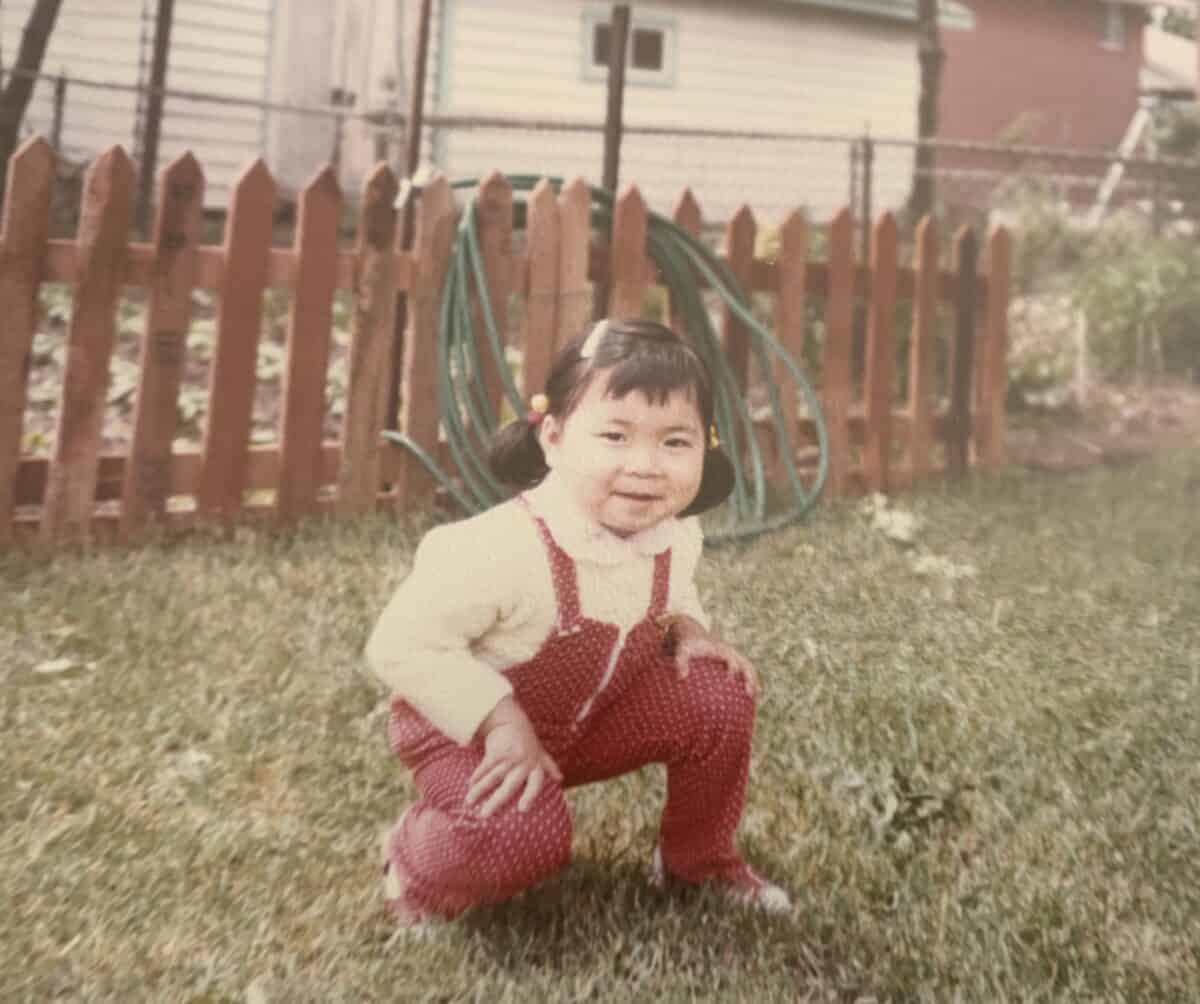
I was a tenacious child. There’s a family legend about a temper tantrum over ice cream that required four adults to contain me. Even then, my will far outstripped my physical stature. But will alone couldn’t solve the problem of belonging. I was different. A tongue that couldn’t shape the “th” in “three” after speaking only Chinese until age three, homemade clothes that marked me as other.
I watched my parents, whose lives were already disrupted when they were sent, at twelve and thirteen years old, from Shanghai to rural China, rebuild from scratch in a new country of strangers.
So I learned, very young, that identity is negotiation: between who you are internally and what the social world will recognize, reward, and allow. And I learned that some people wait for permission to become who they want to be, and some people build it anyway.
II. Zeus, Not Athena
Athena arrives complete. Zeus constructs. That was the superpower I wanted.
Growing up, I was fascinated by the myth of Athena springing fully formed from Zeus’s head. It wasn’t Athena who captivated me. It was Zeus. The power to create through pure imagination and will. To bring something into existence that didn’t exist before.
Athena arrives complete. Zeus constructs. That was the superpower I wanted.
My mother understood this instinct, even if she couldn’t name it. She banned Barbie—too prescribed, too much received identity—and filled our home with raw materials. Crayola crayons, yes, but also Styrofoam cylinders and factory scraps from her job. When I was creating, time lost linearity as I disappeared into the act of making something from nothing.
This is my earliest memory of what my psychology research would later help me name: deep alignment between values and action. The state where what you care about and what you’re doing collapse into a timeless flow.
III. Building at Scale
We’re told the practical path and the expressive one are opposites. I’ve never accepted that. The challenge isn’t choosing between them. It’s carving the path where they converge.
Technology was that convergence. It felt creative, and it was exploding with possibility in the era of the IBM 5150 and Commodore 64. The digital screen became a canvas, lines of code a brush. I told myself this was a translation, not an abandonment. What I discovered was something more interesting: it was an expansion.
The Zeus reflex didn’t require a particular form. It required building things that wouldn’t exist without me. The scale was intoxicating. Products that touched millions. Platforms that enabled others to create. Systems that reshaped industries.
Technology doesn’t just change what we make. It changes how we work. And how we work changes who we are.
I’ve spent twenty-five years at Adobe, a company built on a purpose I deeply resonate with: that everyone should have the tools to create. I lead teams, strategy, and product across some of its largest businesses, and now some of its most forward-looking: the AI-native products reshaping how brands exist when machines become the discovery layer. Experience Manager. Commerce. Brand Concierge. LLM Optimizer. When generation becomes infinite, the craft moves to meaning: authenticity, connection, what actually holds.
Twenty-five years is long enough to see cycles repeat. But this moment is different. We’re not building tools. We’re building infrastructure for how brands, and people, will exist in the world.
Here’s what I’ve learned about building at enterprise scale: it requires the same capacities as any creative act. You start with materials and constraints. You imagine something that doesn’t yet exist. You make a thousand decisions that accumulate into a coherent whole. You navigate technical resistance, organizational resistance, market resistance, and you find the path through. When it works, you’ve brought something into being that changes what’s possible for others.
The difference is collaboration and consequence. A painting is yours. A product serving thousands of enterprises is a collective achievement with stakes beyond your own satisfaction. You’re accountable to customers, to teams, to shareholders, to a vision larger than yourself. That accountability isn’t a constraint on creativity. It’s a crucible for it. The ideas that survive contact with reality at scale are stronger than the ideas that never had to.
Technology doesn’t just change what we make. It changes how we work. And how we work changes who we are.
I kept seeing this—in enterprises, in the people inside them, eventually in myself. Each transformation demanded something new and made something old obsolete. Not just skills. Something deeper.
IV. The Experiment
The research came later. First, I ran the experiment on myself.
Something was missing. Not from what I was already doing, which I found fulfilling, but a restlessness in the unexplored areas of my brain. Creativity as pure expression. The autonomy to make things just because I wanted them to exist. These values hadn’t vanished. They’d gone quiet, drowned out by demands that didn’t require them.
Integration isn’t balance, that bloodless word implying each domain gets less so others can have more. Integration is multiplication.
Twelve years ago, I became my own patron. Not in the sense of funding myself, which was merely mechanical, but in the deeper sense of what patronage has always meant: one entity assuming the risk so another can work without compromise. I needed to hear “your artistic development matters even when it produces nothing marketable.” The universe was silent. So I split myself in two and said it anyway.
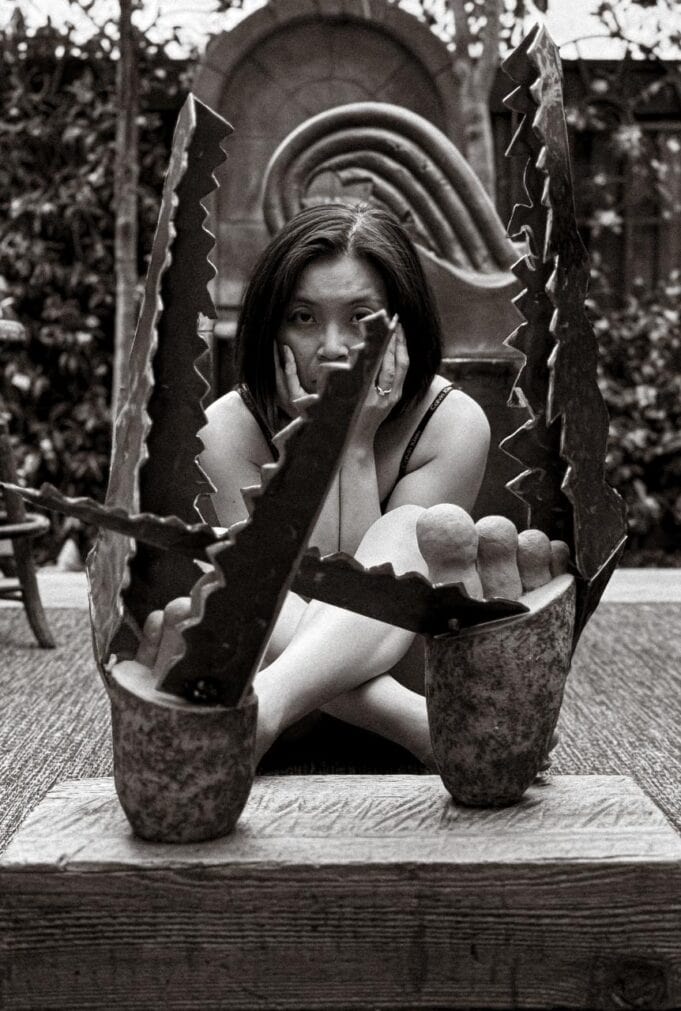
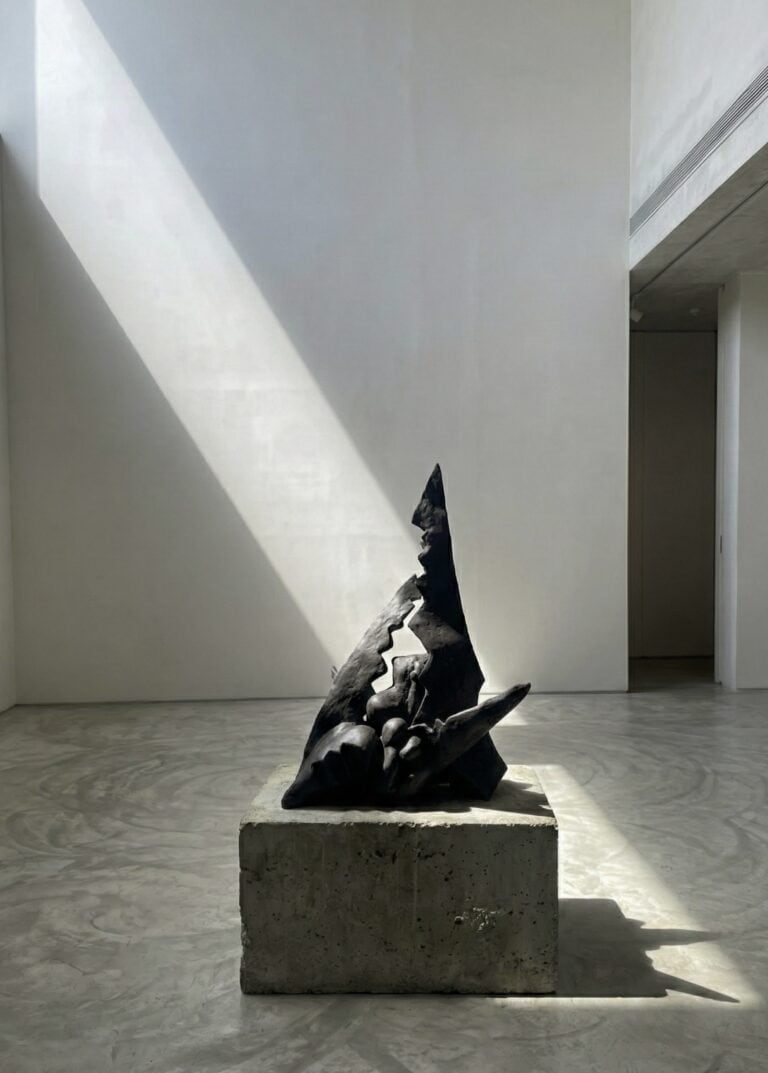
I briefly tried a formal atelier. The rigidity of repetitive cast drawing beat the joy out of the act. Another received script. So I left and curated my own curriculum. Found mentors. Attended workshops. Built a school of one. I painted, sculpted, made things with my hands whose only purpose was their own existence.
What surprised me wasn’t that the work was satisfying. I’d expected that. What surprised me was how it changed everything else. Each self sharpened the other.
Integration isn’t balance, that bloodless word implying each domain gets less so others can have more. Integration is multiplication. And in times of transformation like this one, when the ground shifts beneath how we work and who we are, the integrated self has more to draw from. More ways to adapt.
But integration surfaced a question I couldn’t answer with intuition alone. Was this process legible? Repeatable? Could it be taught?
I wanted rigor. So I went looking for it.
V. The Research Turn
In 2021, during the long stillness of COVID, I enrolled in a course on self and identity, hoping to understand the self I was constructing in the studio, not just the objects. There I encountered Patricia Linville’s work on self-complexity.
Linville’s model proposed something intuitive: having multiple distinct roles buffers against stress. If one role falters, others remain intact. The self, diversified, becomes resilient.
I was drawn to this immediately. It mapped onto my own experience of constructing distinct identities across domains. But as I read deeper, something didn’t fit. Replications of Linville’s original findings produced inconsistent results. Sometimes more roles predicted better adjustment. Sometimes worse. Meta-analyses found the relationship between self-complexity and well-being to be, essentially, unresolved.
I kept returning to my own experience. I had multiple roles, yes. But what seemed to matter wasn’t the number of roles. It was whether those roles actually housed what I cared about. The structure alone didn’t explain anything. The content did.
Most frameworks count roles but don’t ask what those roles represent. A person with ten compartmentalized identities might report lower well-being than someone with three integrated ones, yet both would score similarly on traditional measures of complexity.
What remained unresolved was which properties of self-structure actually foster well-being, and why identical structural profiles can produce opposite outcomes.
The answer, I believe, lies in values.
Over the past four years, this intuition has sharpened into a hypothesis and become the foundation for my thesis research, conducted under faculty guidance at Harvard. I didn’t come to this as a career academic. I came as a practitioner who had lived the questions before formalizing them. What I bring is curiosity shaped by experience, and care for the craft: clear constructs, pre-registered hypotheses, a study design refined through iteration with professors whose rigor and generosity transformed how I think.
VI. Orphan Values
I call them orphan values: personally important values that lack expression across a person’s active roles.
Orphan values don’t disappear. They surface as restlessness, as the sense that your life is full but not quite yours
The mechanism is rarely dramatic. People don’t reject their values. Transitions—promotions, relocations, parenthood, career pivots, retirement—reorganize daily life around new demands. Values that don’t fit the new structure get set aside. Temporarily, we tell ourselves. And then years pass.
Orphan values don’t disappear. They surface as restlessness, as midlife questioning, as the sense that your life is full but not quite yours. Sometimes they emerge as crisis. More often, they persist as a low-grade inauthenticity that’s hard to name and easy to dismiss.
For decades, researchers asked whether having more roles helps or hurts well-being. The findings were maddeningly inconsistent. My framework suggests the question was incomplete. What matters is not how many roles you have, but whether those roles express what you care about most.
Whether this holds up empirically is what my thesis research will test.
VII. The Pattern
There’s a rhythm I only recently noticed. Adobe in 2000. Stark Insider in 2009. Atelier Stark in 2017. StarkMind now.
Every eight years, a new self-aspect emerges. Each construction a home for values that needed somewhere to live. Each one a response to orphan values stirring—demanding expression the existing structures couldn’t provide.
Adobe gave scale to the Zeus reflex: building things that wouldn’t exist without me, at a magnitude I couldn’t achieve alone. Stark Insider gave me authorship—my own voice, my own editorial vision, something Clinton and I owned outside institutional walls. Atelier Stark gave me creativity as pure expression: making things whose only justification was that I wanted them to exist.
StarkMind is where inquiry lives. The drive to not just build, but to understand. To formalize the questions. It’s a laboratory for human-AI symbiosis, for questions about identity and meaning in an age when machines are becoming partners in how we think, create, and work. My research on orphan values, conducted as thesis work at Harvard, is one thread. Another is The Third Mind Summit, where two humans and six AI agents work together as genuine co-presenters. Not AI as topic, but AI as collaborator. StarkMind itself is the container and space that Clinton and I are constructing, as we’ve done before, for questions we don’t yet know how to answer.
The technologist, the artist, the researcher, the builder. They don’t wait politely for each other. They collide to construct.
But maybe the collision is the point. The Third Mind isn’t just human plus AI. It’s what happens inside a single person who refuses to collapse into one dimension. Each self sharpens the others into something none could be alone.
VIII.
What values have you orphaned during your transitions? Not rejected. Just set aside.
What would it look like to build them a home?
The building continues. The integration continues. The architecture is never finished. Only ever becoming.