
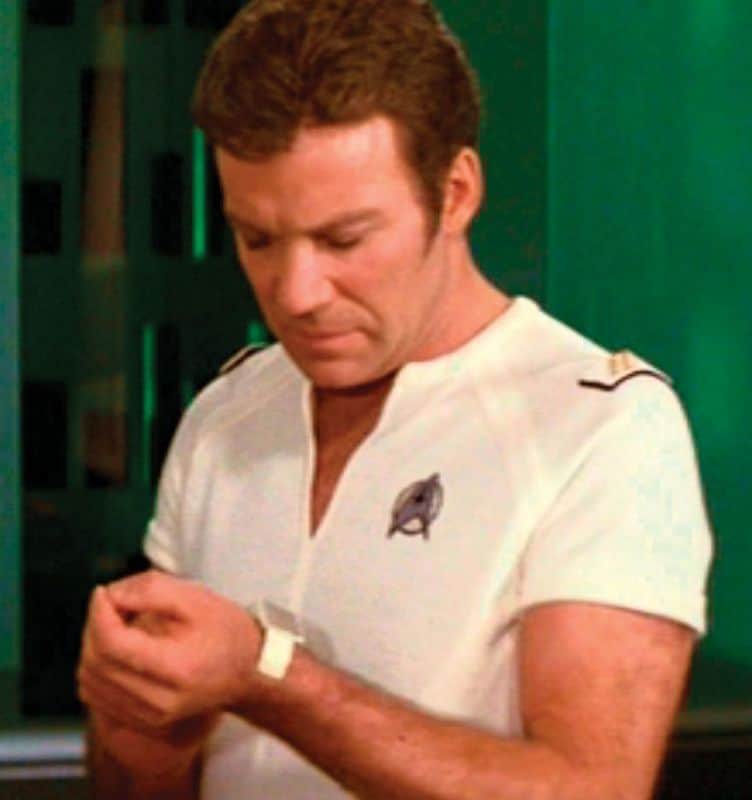
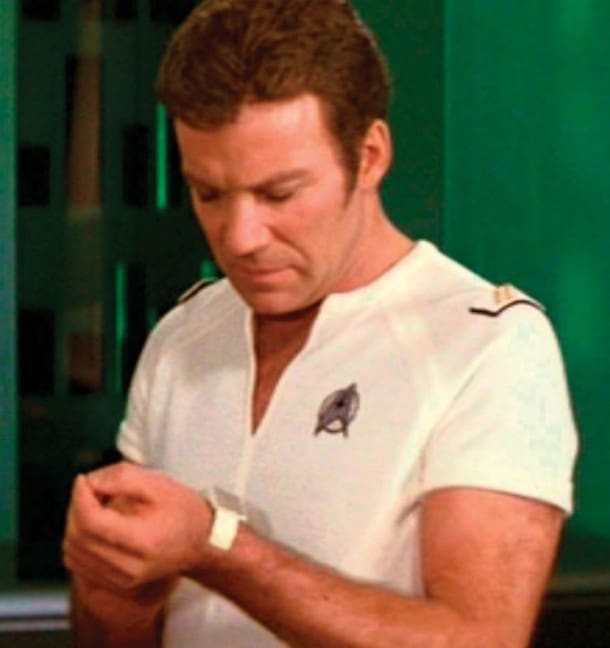
Move over Google Glass, there’s a new king of wearable computing. According to a report released today, the Starfleet Wrist Communicator from Star Trek is the most desired wearable tech device. Whether or not it actually exists, Jim, is a matter of eternal debate. Regardless, one out of three surveyed picked it over X-ray glasses from James Bond, and (my choice for sure!) Tony Stark’s suit from Iron Man.
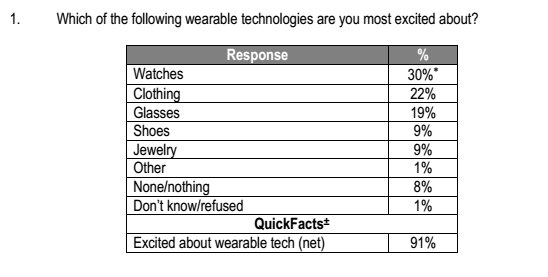
On a more serious not (but still quite possibly dreamy), of the 1,000 adults surveyed by Citrix, 30% indicated they were most excited about watches. A bit of a surprise that result, especially given all the hype and headlines Google Glass has garnered over the last twelve months or so; granted, the excitement has recently subdued.
Most (70%) want their wearable tech to blend in with their clothing. Security was cited (42%) as the top concern.
Will wearable tech become as ubiquitous as the smartphone?
The majority (53%) says no. But a minority (17%) says that in “10+ years” (a bit of an open range that response) wearable tech will become more common than the smartphone.
Is there money in wearable tech?
All signs point to a niche market. 6 out of 10 in this survey would not buy any form of wearable computing.
That’s a marked contrast to what you’d see in a lot of reports across blogs, forums, and social media. Keep in mind, however, that many of the early reports about wearable computing–most notably Google Glass–come from… you guessed it… early adopters. Anything new to that eager group is exciting; no question we love shiny, new toys. The challenge of making that leap, from niche to mainstream, is the famous premise of Geoffrey Moore’s Crossing the Chasm. I’d wager that we will see computing devices and sensors of some form or another embedded into our everyday lives–glasses, watches, jackets, shoes. Why not? I am skeptical, though, that things such as Google Glass, as least in their current form, will be anything, but a curiosity for the technorati.
Interestingly, there’s a disconnect between these survey results and market action.
As noted, watches come out top. Yet Samsung’s foray this year into the “smartwatch” category was an all out flop. The Galaxy Gear is a non-starter. People line up for iPads, and iPhones, but as of yet not smartwatches. This suggests one of two things: (1) Samsung got it wrong – the design of the Gear is sub-par and doesn’t meet consumers’ expectation of a useful smart watch; or (2) it’s too early – much like we saw when Apple introduced the first tablet computer the “Newton” in the 90’s the market wasn’t ready (for a variety of reasons that would require an exhaustive, and no doubt interesting, case study).
If you got it flaunt it.
Given that many (endlessly) flaunted Google Glass as a tech status symbol of sorts it’s perhaps little surprise that millennials are twice as likely as boomers to want their wearable tech visible. After all, in Star Trek, James Bond and Iron Man, gadgets all enjoyed high profile, starring roles.